
GRAND PIANO
experimental design
(“duet”), cross-strung
460-stringed
(each string set includes
9 single strings and sixteen 2-string
wound choirs, sixty-three 3-string
unwound choirs)
176-keyed
(88 keys in each of the
two keyboards; extent of each
keyboard is А of the double contra
octave — с of the five-line octave)
“Pleyel, Wolff and Company” Factory,
No. 118177. France, Paris, the end of the 1890s
“PARIS FRANCE / PLEYEL WOLFF & CIE” — a cast inscription on the frame (area of the tuning pegs of the descant register);
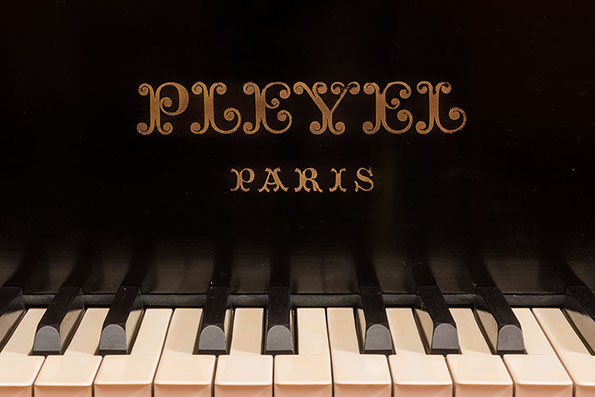
“Pleyel Wolff & Cie / Paris” — an inscription by golden paint on the hinged parts of the cover;
“PLEYEL / PARIS” — inlaid with brass in the lids;
“118177” — embossed with a punch on the inside of the side bar (area of the descant strings);
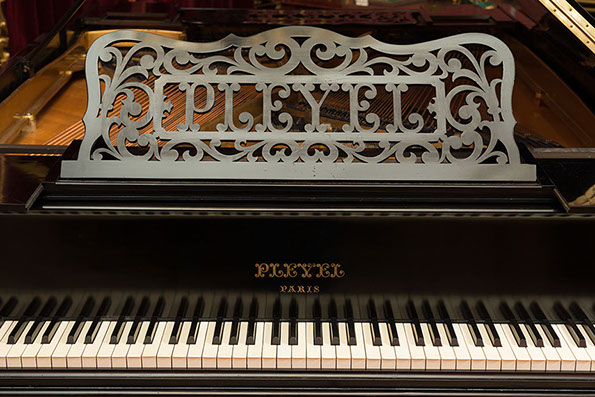
“PLEYEL” — a carved inscription on the music stands.

2450×1470×960
Wood, metal, bone, fabric, felt
Around 1902 (not later than 1903),
arrived from an unknown source
Stock number: 16516/111

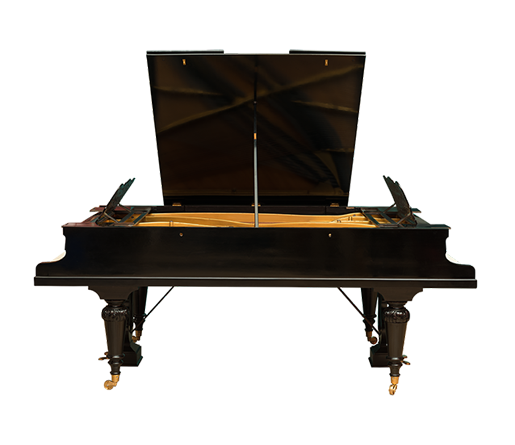
There are 2 grand pianos; each grand piano is equipped with its own keyboard, a set of cross strings, a hammer, a pedal and a damper mechanism. The grand pianos are mounted in the same rectangular case reinforced with a cast iron frame. The key action of the keyboards is rehearsal, Keller-type. The dampers are Irish-type. 4 (2 + 2) pedals of traditional design are mounted in “5-stringed lyres”. There is a manual 2-way pedal action switch: with it, the ability to operate the pedals is provided only to one of the performers.