
GRAND PIANO
cross-strung
246-stringed
(7 single strings and
four 2-string wound choirs, seventy
seven 3-string unwound choirs)
88-keyed
(keyboard extent is А of the
double contra octave — с of the five
line octave)

“J. Becker” Factory, No. 4009.
Russia, St. Petersburg, the third quarter of the 19th century (before 1877)
“ПОСТАВЩИКЪ ИХЪ ВЕЛИЧЕСТВЪ / ИМПЕРАТОРА ВСЕРОССIИСКАГО И ИМПЕРАТОРА АВСТРIИСКАГО / [three crowns are over the initials in circles] / Я. БЕККЕРЪ / ВЪ С. ПЕТЕРБУРГЕ. / 4009 (Supplier of their Majesties the Emperor of All Russia and Austrian Emperor, J. Becker in S. Petersburg, 4009)” — a stamp by black dye on the sound board;
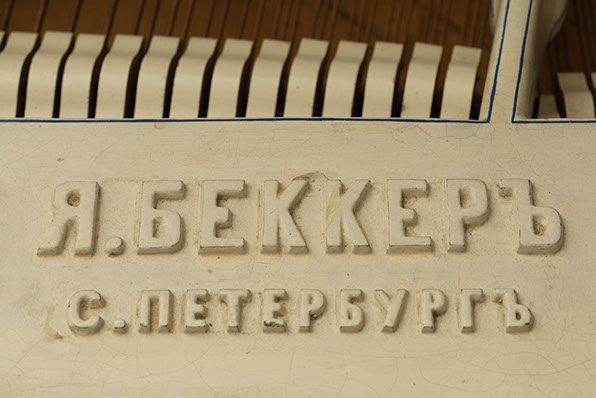
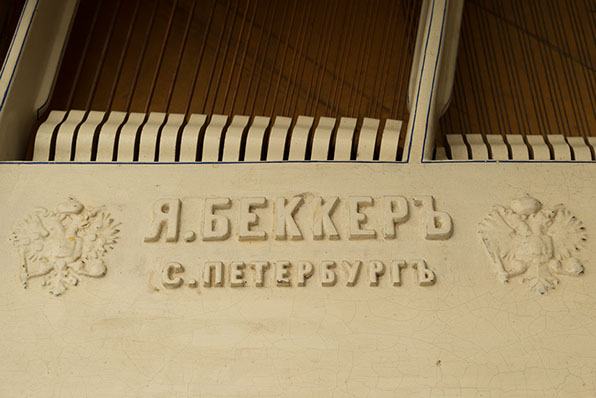
“Я. БЕККЕРЪ (J. Becker) [on the left and on the right — the crowns of the Russian Empire]” — a cast inscription on the frame (area of the tuning pegs of the bass register);
“J. Becker” — inlaid with brass in the lid;
“HAlthaus III/12 1877” — an inscription by ink pencil on the key а of the four-line octave.

2620×1460×990
Wood, metal, bone, fabric, felt, gesso
1949, transferred from the Historiography Cabinet of the Leningrad State Research Institute of Theater and Music
Stock number: 16516/1962

The strings are attached to the tuning pegs from the bottom. The frame is cast iron. The section of strings located behind the bridge is equipped with dampers. The key action is rehearsal. The Irish-type dampers are set on metal legs. There are 2 pedals mounted in a “lyre”. The case is decorated with relief pierced and embossed carving, tinted (with the frame) in imitation of ivory (“French lacquer”), the panels are tinted blue and straw
The instrument belonged to A. G. Rubinstein (1829–1894)